Family Life
Raising Grateful Kids in a Have-It-All World
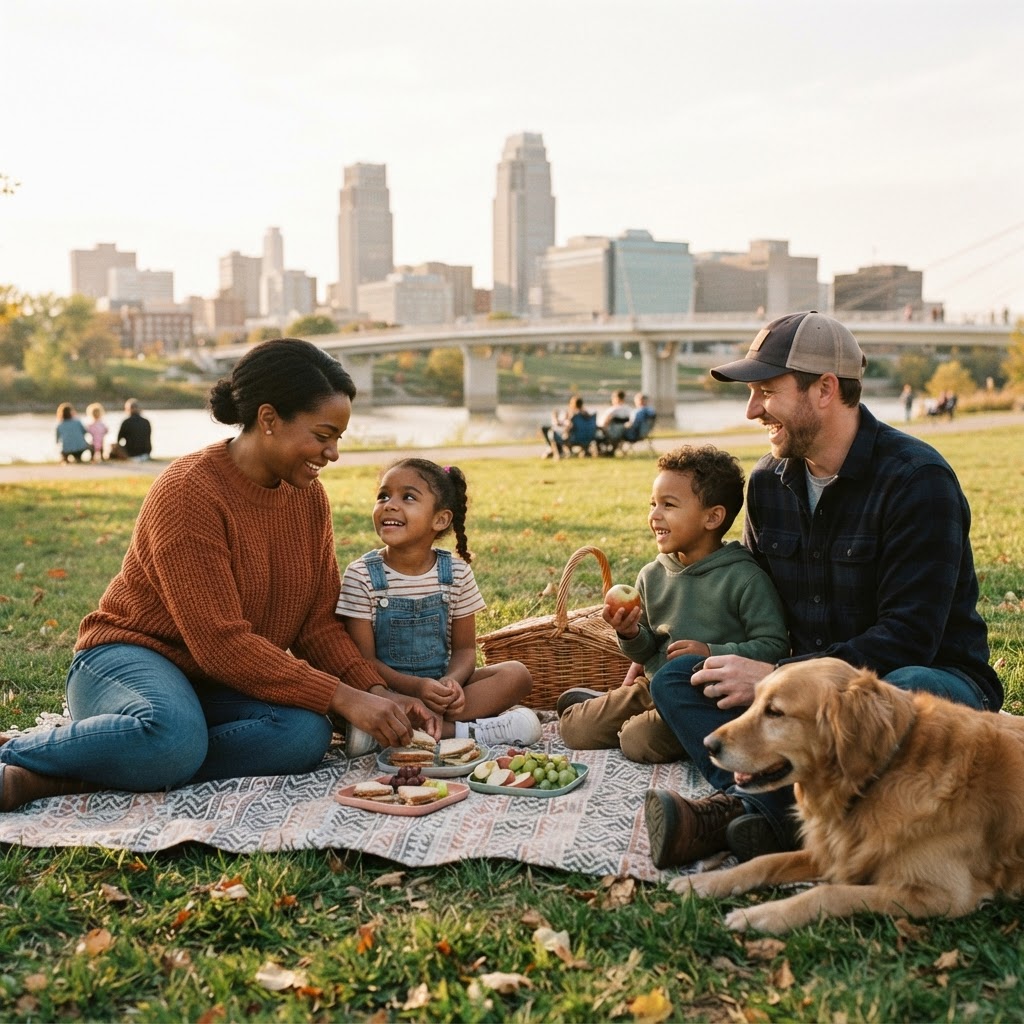
Gratitude doesn't come installed in a child. It gets built, slowly, in small everyday habits. Here's a warm, practical look at raising grateful kids in a world that hands them almost everything, with real Omaha ways to serve and give.
There was a brand-new toy on the floor by the couch, still half in its box, and the four-year-old was already asking what he was getting next. Not in a bratty way. Just a Tuesday. That's the thing nobody warns you about. The problem usually isn't a bad kid. It's a good kid living in a world that hands him almost everything before he thinks to want it.
Look, gratitude doesn't come installed. No child is born thankful. Wanting more is the default setting, and if we're honest, we adults never fully grow out of it either. So the job isn't to shame it out of them. It's to build the other thing, slowly, on top of it. And that building happens the same way most real parenting happens, in ordinary moments that don't feel like much while you're in them.
Start with the dinner table, because you're already sitting there anyway. You don't need a program. You just go around and each person names one good thing from the day. That's it. Some nights it's deep and some nights the six-year-old is grateful for tater tots, and that counts too. The point isn't the answer. The point is that a kid who is made to look for one good thing every single evening slowly becomes a kid whose eyes are trained to find them. We made the fuller case for why the family table does this quiet work in our piece on family traditions worth starting in Omaha, and thankfulness at dinner is about the easiest tradition there is to start.
Then there's the jar. Keep a glass jar somewhere the family passes all day, with little slips of paper and a pen beside it. When something good happens, anybody can write it down and drop it in. A snow day. Grandma called. Dad got the grill working. Then on New Year's Eve, or a rainy afternoon when everyone's climbing the walls, you dump it out and read them. Kids love this more than you'd think. It turns a whole year of small mercies into something you can hold in your hands, and it teaches them that the good stuff was always there, just uncounted.
Here's the honest part, though. You can do the jar and the dinner-table thing and still raise a kid who thinks the world owes him a smooth ride. The habit that actually moves the needle is serving somebody else. Gratitude and service are two ends of the same rope. A child who has stood in a warehouse packing food for families who don't have enough understands his full pantry in a way no lecture will ever teach him. It just lands different when you've seen it.
And Omaha makes this easy, which is a gift. Food Bank for the Heartland over on South 84th Street runs volunteer shifts where kids as young as ten can help alongside a parent, sorting and packing food that goes right back out into the community. It's a couple of hours, it's free, and it stays with them. Completely KIDS here in Omaha runs a weekend food program that packs meal bags for local kids who'd otherwise go hungry over the weekend, and they welcome family and group volunteers. Your own church almost certainly has something too, a meal train, a nursery that needs hands, an older neighbor whose driveway needs shoveling. Let your kids do the shoveling. Let them carry the casserole to the door and knock themselves.
Giving money matters as well, and it's worth doing on purpose where they can see it. When a child sets aside part of his own allowance for the offering plate or a giving jar, something shifts. It stops being abstract. We wrote about that whole conversation in teaching Omaha kids the value of money, and generosity is the part most families skip. Don't skip it. A kid who learns early that some of what he has is meant to be handed on grows into an adult who isn't ruled by his own wallet.
Watch your own mouth, too. This is the uncomfortable one. Children absorb our running commentary, and if the soundtrack of the house is complaint, the car's too small, the weather's wrong, so-and-so has it easier, they will simply learn that grammar. But a parent who says grace and means it, who notices out loud that the sunset over the Missouri was something tonight, who thanks the waitress and the mailman by name, is teaching gratitude without ever calling it a lesson. Reading to them helps here as well, since so many good stories are quietly about noticing and being thankful, and our note on the power of reading aloud to your children has a place to start.
Faith gives all of this a floor to stand on. It's one thing to be grateful into the air. It's another to have Someone to be grateful to. When you teach a child that every good thing is a gift and that gifts come from a Giver, thankfulness stops being a mood that depends on a good day and becomes a settled way of seeing. That's the version that lasts. That's the version that carries them through the years when the days aren't good.
So don't wait for a grateful kid to appear. Build one. Start the jar this week. Ask the question at dinner tonight. Sign up for one Saturday shift this month and bring them along. It won't feel like much in the moment. Most of the important things don't. But one day you'll catch your own child noticing a small good thing and saying thank you without being told, and you'll know the quiet work took.
Comments
No comments yet — be the first to share your tips!
Leave a Comment
Free: Where Kids Eat Free in Omaha
Our verified guide to 20+ Omaha restaurants where kids eat free (or cheap) — mapped out for every day of the week. Plus our free Thursday newsletter for Omaha families.
Join Omaha families getting the free weekend guide · No spam, unsubscribe anytime.
Read Next
More Omaha stories for your family

Family Life · Oct 27, 2026
Challenge Island Omaha Northwest: Screen-Free STEAM Fun for Omaha Kids (Sponsored)
Award-winning, hands-on STEAM classes, camps, Girl Scout badge workshops and birthday parties for Omaha kids, with no screens in sight. (Sponsored)

Family Life · Sep 16, 2026
Celebrate at BounceU for Birthday Parties and much more! (Sponsored)
BounceU of Omaha is one of the few truly 100% private kids party venues in Omaha — two arenas of inflatables, Party Pros who handle setup and cleanup, and weekly Open Bounce sessions for the whole family. (Sponsored)
Family Life · Jul 20, 2026
Tell Them Where They Come From: Why Your Children Need the Family Stories Only You Can Give
Your children are hungry for something no store sells and no screen streams: the stories of their own people. When you tell them where they come from, you give them roots, courage, and a place in a story bigger than themselves.
Happening in Omaha Soon
Sponsored

Coffee Hour
Good coffee. Great conversation. Stronger together. Wednesdays at 7am CST.
