Omaha History
The 1898 Trans-Mississippi Exposition: When the World Came to Omaha
For five months in 1898, a gleaming white city of domes and palaces rose along a lagoon in north Omaha. More than two and a half million people came to see it, including a sitting president. Then it was torn down on purpose, and today a quiet neighborhood park sits right on top of where it stood.
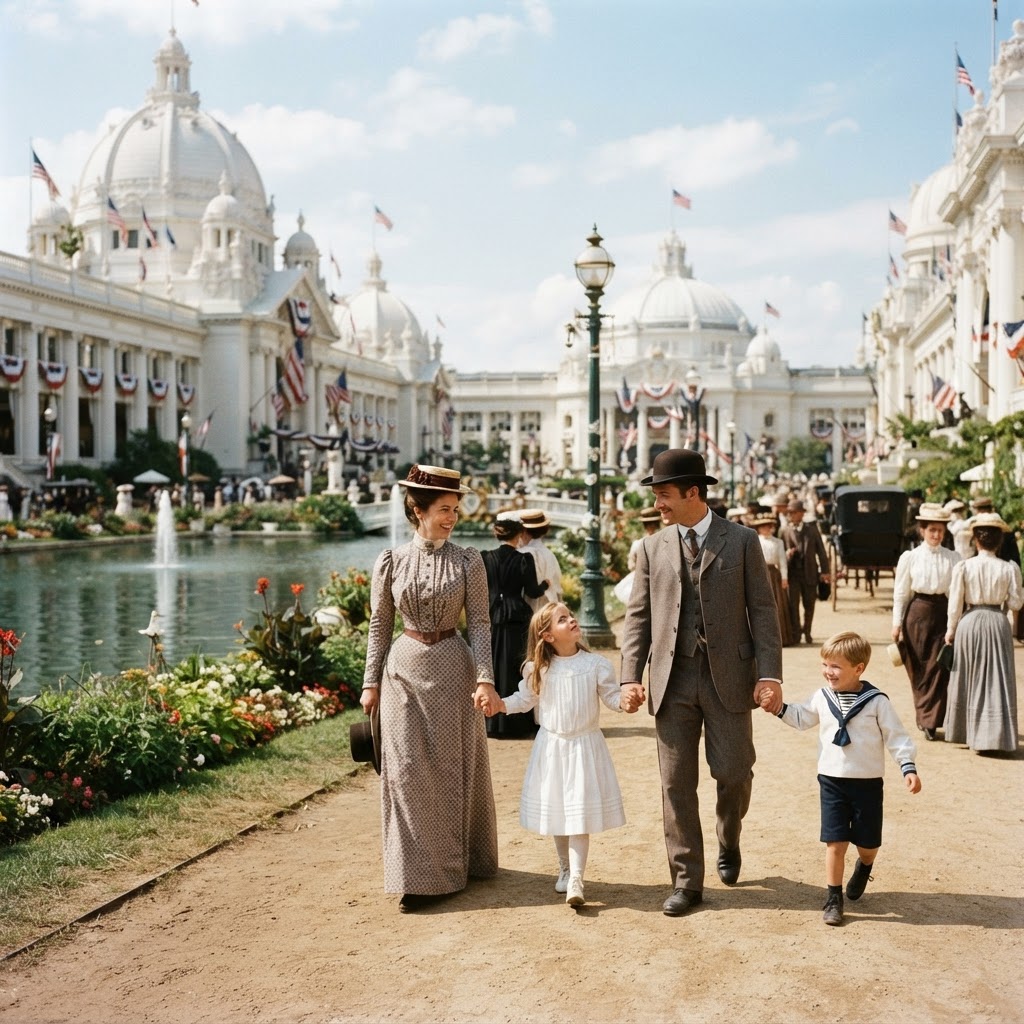
Picture north Omaha in the summer of 1898. Where there are houses and streets today, near 24th and Pratt, a visitor stepping off the streetcar would have seen something that did not look like Nebraska at all. A long reflecting lagoon, five blocks of it, lined on both sides with enormous white palaces. Domes. Columns. Grecian temples and grand European facades, all of it gleaming white and mirrored in the water. People called it the White City, and for one summer it was the busiest place in the state.
This was the Trans-Mississippi and International Exposition, Omaha's own world's fair. It ran from June 1 to November 1, 1898, and it is one of the biggest things that ever happened to this city, even though hardly a trace of it survives.
Here is the backstory. In the 1890s, Omaha was a young, ambitious railroad and stockyards town trying to prove it belonged in the big leagues. The whole country west of the Mississippi River, the trans-Mississippi region, wanted to show off what it could do. Omaha won the right to host, and a group of local backers led by businessman Gurdon Wattles pulled it together. When the bidding for the land came down to the wire, pioneer banker Herman Kountze made the winning offer, and the fair went up on his big holdings in north Omaha, in what became the Kountze Place neighborhood. History Nebraska tells the fuller story in their piece on the world's fair of the Midwest.
The centerpiece was the Grand Court. Twenty-some buildings arranged around that long lagoon, running roughly from 16th to 24th Streets between Pinkney and Pratt. And here is the part people always find surprising. Almost none of it was real. The gleaming marble palaces were not marble at all. They were built out of wood frames covered in something called staff, a cheap mix of plaster and fiber that could be molded into columns and statues and painted to look like stone. It was never meant to last. It was theater, essentially, a temporary dream city built to dazzle you for one season and then come down.
Dazzle it did. Over the five months it was open, more than 2.6 million people passed through the gates to see the roughly four thousand exhibits. For a city whose population was a fraction of that number, it was staggering. The fairgrounds had a midway with rides and sideshows, a lagoon you could ride a gondola across, buildings full of the newest machines and art and products from around the world, and at night the whole White City lit up with electric lights, which was still a genuine marvel in 1898.
The biggest single day came on October 12, 1898, President's Day, when President William McKinley himself came to Omaha and spoke at the fair. A sitting president, in Nebraska, drawing an enormous crowd. William Jennings Bryan, the famous Nebraska orator, was around the festivities too. For a city trying to prove it mattered, having the president show up was about the loudest statement possible.
There is another chapter to this story that deserves to be told honestly. Running alongside the fair was the Indian Congress, held from August through October of 1898. It brought more than 500 people from around 35 different Native American tribes to Omaha, the largest gathering of its kind up to that point. Among those present was the Apache leader Geronimo, who at the time was a prisoner of war held by the U.S. government and attended under armed guard. The Congress was part genuine cultural gathering and part spectacle staged for fairgoers, and photographer Frank Rinehart took a remarkable series of portraits there that survive to this day. It is a complicated legacy, and the Omaha Public Schools and other historical records have worked to tell it with the honesty it deserves rather than the way 1898 framed it.
So what happened to the White City? It came down, just as planned. A smaller follow-up fair, the Greater America Exposition, used the grounds in 1899, and after that every building was demolished. The lagoon was filled in. The staff palaces, never built to survive a Nebraska winter anyway, were cleared away, and the neighborhood streets went back to being neighborhood streets.
Which brings us to what you can actually see today. Not much, honestly, and that is part of what makes it fascinating. The heart of the old Grand Court is now Kountze Park, a quiet neighborhood green space in north Omaha that sits, more or less, right on top of where that long lagoon used to shimmer. There is a monument there, placed during the fair's centennial back in 1998, marking the spot. Stand in the park and it takes some imagination, but you are standing in the middle of what was once a temporary city that drew millions.
That is the strange magic of the Trans-Mississippi Exposition. For one summer, Omaha built something spectacular, showed it to the world, welcomed a president, and then took the whole thing apart. It is the kind of history that hides in plain sight, the same way so much of this city's past does, from the amusement park that vanished at Peony Park to the river twist that put a piece of Iowa on our doorstep. To keep exploring the city and find something to do this week, take a look at our Explore Omaha event calendar.
Comments
No comments yet — be the first to share your tips!
Leave a Comment
Free: Where Kids Eat Free in Omaha
Our verified guide to 20+ Omaha restaurants where kids eat free (or cheap) — mapped out for every day of the week. Plus our free Thursday newsletter for Omaha families.
Join Omaha families getting the free weekend guide · No spam, unsubscribe anytime.
Read Next
More Omaha stories for your family
Omaha History · Aug 28, 2026
Omaha's New Tallest Building: Mutual of Omaha's Downtown Tower Caps Off 2026
Mutual of Omaha's 44-story downtown headquarters is now the tallest building in Nebraska, and it's set to open this fall. Here's what to know, and why it's worth a family trip downtown during the holidays.

Omaha History · Jul 2, 2026
Boys Town: The Story of Father Flanagan's City of Little Men
In 1917, a young Omaha priest borrowed ninety dollars, rented a run-down house, and took in five boys nobody else wanted. What Father Edward Flanagan built from there became its own village west of the city, a movie that won an Oscar, and a nonprofit that still helps kids more than a century later.
Omaha History · Jul 1, 2026
Peony Park: Omaha's Beloved Lost Amusement Park
For 75 years, near 78th and Cass, Omaha kids spent their summers at Peony Park. The sand-bottom pool, the big band nights in the ballroom, the roller coaster. It closed in 1994, and a lot of Omaha still misses it.
Happening in Omaha Soon



Sponsored

Nobility Digital Marketing
Websites, marketing, and automation that grow your business.
