Omaha History
Council Bluff: When Lewis and Clark Met the Oto and Missouria Near Omaha
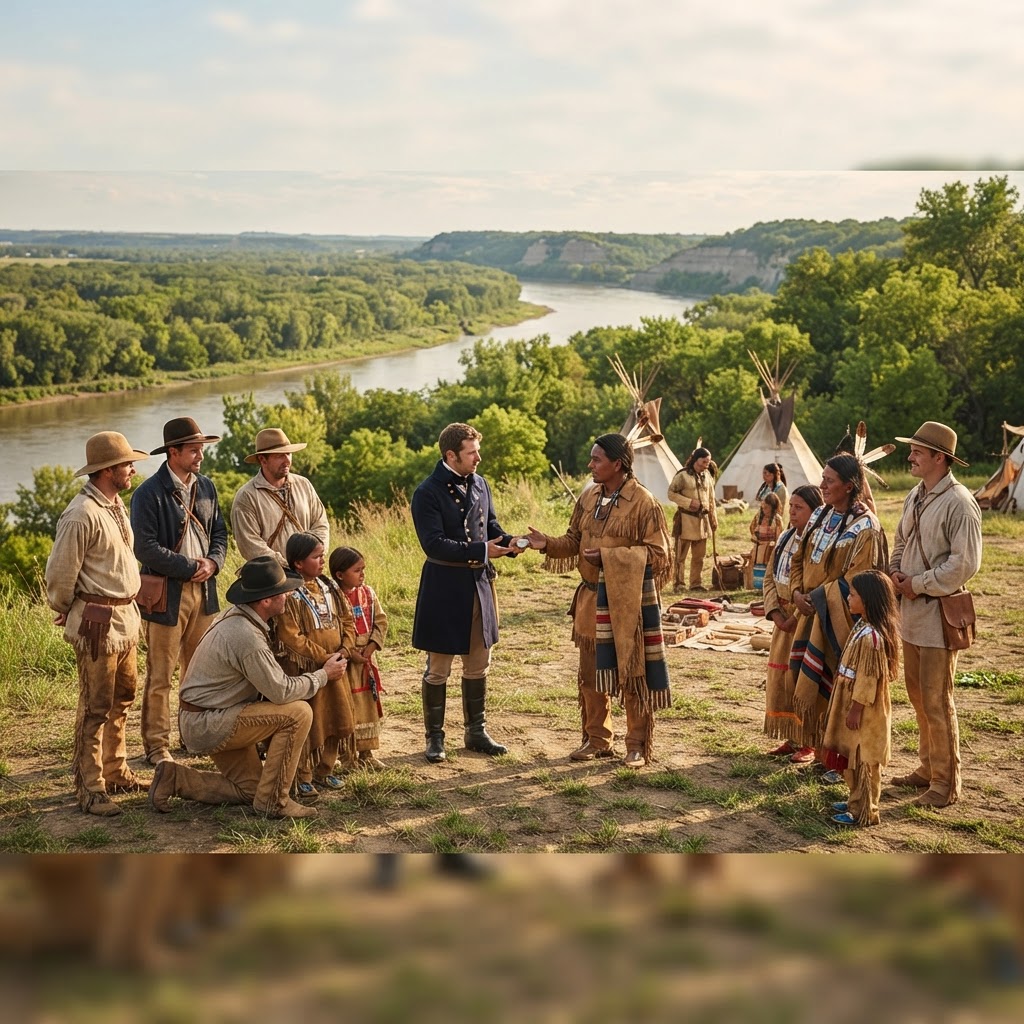
In the summer of 1804, the Corps of Discovery paddled and pulled their way up the Missouri River past the future site of Omaha and paused for a landmark moment. On a high bluff they named Council Bluff, Lewis and Clark held their first formal council with Native American leaders, tying our region forever to one of America's greatest journeys.
More than two centuries ago, long before Omaha's bridges and skyline, a small band of explorers worked their way up the Missouri River and paused on a windswept bluff just north of where our city now stands. There, in the first days of August 1804, the Corps of Discovery led by Captains Meriwether Lewis and William Clark held their very first formal council with Native American leaders. They named the spot "Council Bluff," and with that meeting, the Omaha area earned a lasting place in the story of America's great westward expedition.
The journey to our doorstep had begun months earlier. President Thomas Jefferson had charged Lewis and Clark with exploring the vast lands of the Louisiana Purchase, finding a route toward the Pacific, and building friendships with the many Native nations who had lived on these lands for generations. The Corps set out from Camp Dubois near St. Louis on May 14, 1804, pushing a fifty-five-foot keelboat and two smaller pirogues against the muddy current. Theirs was slow, grueling work. Day after day the men rowed, poled, and sometimes hauled their boats upstream by rope, often covering only a dozen or so miles between dawn and dusk. By late July they had reached the mouth of the Platte River near present-day Omaha, a landmark that rivermen treated as a gateway to the upper Missouri.
Hoping to meet the Native peoples of the region, the captains sent word inviting local leaders to a council. On the evening of August 2, a delegation of Oto and Missouria men arrived at the expedition's camp. The next morning, August 3, 1804, the two groups gathered on the bluff for a day of speeches, gifts, and ceremony. Lewis and Clark spoke of the new American government and their hopes for peace and trade. They distributed peace medals and presents, smoked a pipe together, and demonstrated curiosities that drew genuine wonder, including an air gun, a compass, a magnet, and a spyglass. It was a respectful, hopeful first encounter, and it set the pattern for dozens of councils the Corps would hold across the continent in the months and years to come.
The Oto and Missouria were the gracious hosts of this meeting, and their presence reminds us that the land around Omaha was a gathering place and a homeland long before the expedition arrived. These two related nations, who would later join together as the Otoe-Missouria, had deep roots along the Missouri and Platte rivers. The council was not the beginning of the region's history but a single chapter in a much longer Native story, one worth remembering with gratitude and respect for the peoples who first welcomed these travelers.
It is worth clearing up a friendly bit of confusion that has lingered ever since. The "Council Bluff" that Lewis and Clark named sits on the Nebraska side of the river, roughly twenty miles north of downtown Omaha near the modern town of Fort Calhoun. It is not the same place as the city of Council Bluffs, Iowa, which lies downstream on the opposite bank. That Iowa city, first settled as Kanesville, borrowed the name only in 1852, drawing on the fame of the original bluff to the north. So when you hear "Council Bluff," picture the Nebraska heights where the expedition actually camped, not the busy Iowa city across the water.
The captains were so impressed with the high, commanding ground that they recommended it as the site for a future government post. Years later, in 1820, the United States Army acted on that very suggestion and built Fort Atkinson there, the first U.S. military post west of the Missouri River. At its peak the fort housed as many as twelve hundred soldiers and played an important role in the fur trade and in relations with Native nations until it closed in 1827. Today a faithfully recreated Fort Atkinson welcomes families to walk its grounds and imagine those early days, a tangible link back to the council that gave the place its name.
The story of Council Bluff is a proud thread in the larger tapestry of how this region came to be, connecting to the chapters of how Omaha began and the later winter quarters at Florence. When you stand on the bluffs above the Missouri and watch the river roll by, you are looking at the same waters that carried the Corps of Discovery toward the unknown, and at the very ground where Omaha's heritage and the nation's grand adventure first met.
Comments
No comments yet — be the first to share your tips!
Leave a Comment
Free: Where Kids Eat Free in Omaha
Our verified guide to 20+ Omaha restaurants where kids eat free (or cheap) — mapped out for every day of the week. Plus our free Thursday newsletter for Omaha families.
Join Omaha families getting the free weekend guide · No spam, unsubscribe anytime.
Read Next
More Omaha stories for your family
Omaha History · Aug 28, 2026
Omaha's New Tallest Building: Mutual of Omaha's Downtown Tower Caps Off 2026
Mutual of Omaha's 44-story downtown headquarters is now the tallest building in Nebraska, and it's set to open this fall. Here's what to know, and why it's worth a family trip downtown during the holidays.
Omaha History · Jul 2, 2026
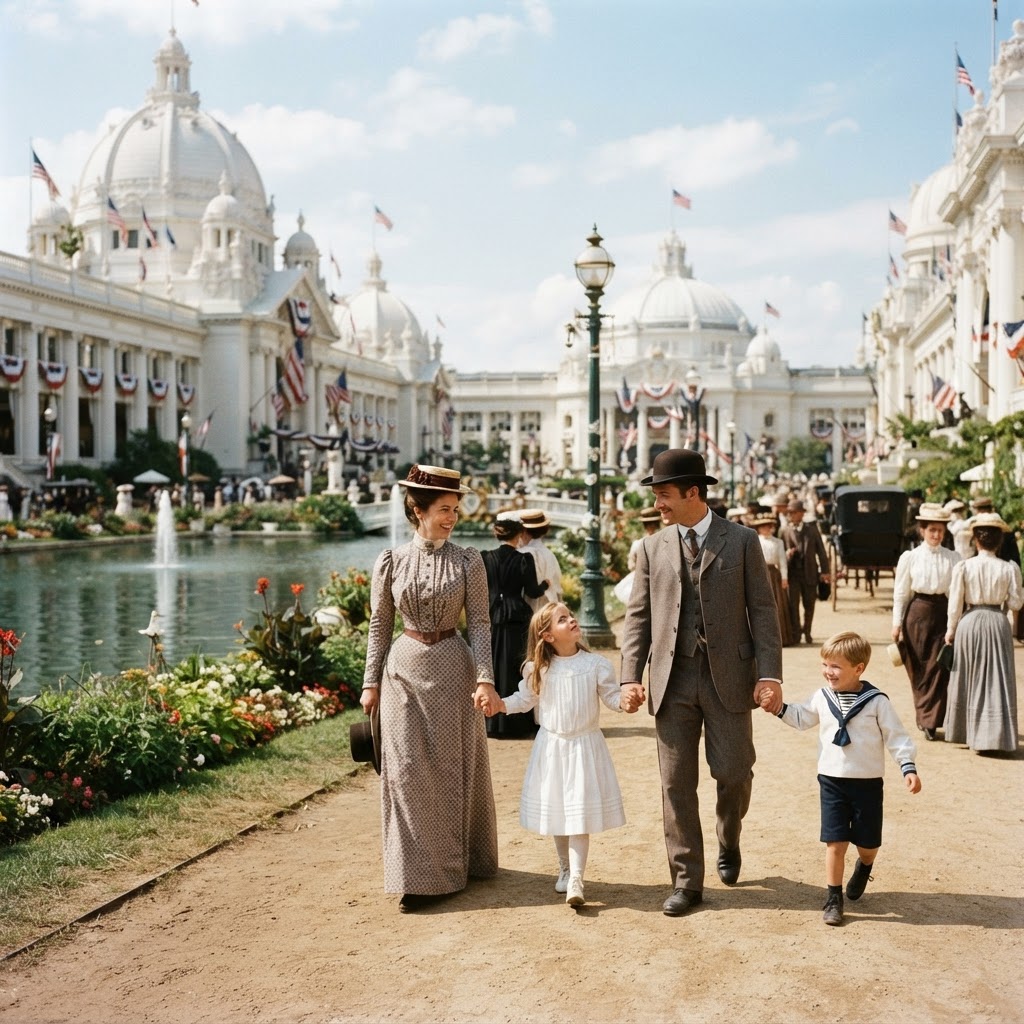
The 1898 Trans-Mississippi Exposition: When the World Came to Omaha
For five months in 1898, a gleaming white city of domes and palaces rose along a lagoon in north Omaha. More than two and a half million people came to see it, including a sitting president. Then it was torn down on purpose, and today a quiet neighborhood park sits right on top of where it stood.
Omaha History · Jul 2, 2026
Boys Town: The Story of Father Flanagan's City of Little Men
In 1917, a young Omaha priest borrowed ninety dollars, rented a run-down house, and took in five boys nobody else wanted. What Father Edward Flanagan built from there became its own village west of the city, a movie that won an Oscar, and a nonprofit that still helps kids more than a century later.
Happening in Omaha Soon


Sponsored

Nobility Digital Marketing
Websites, marketing, and automation that grow your business.
